
Columbus, MS Neighborhoods & Areas: A Homebuyer’s Guide
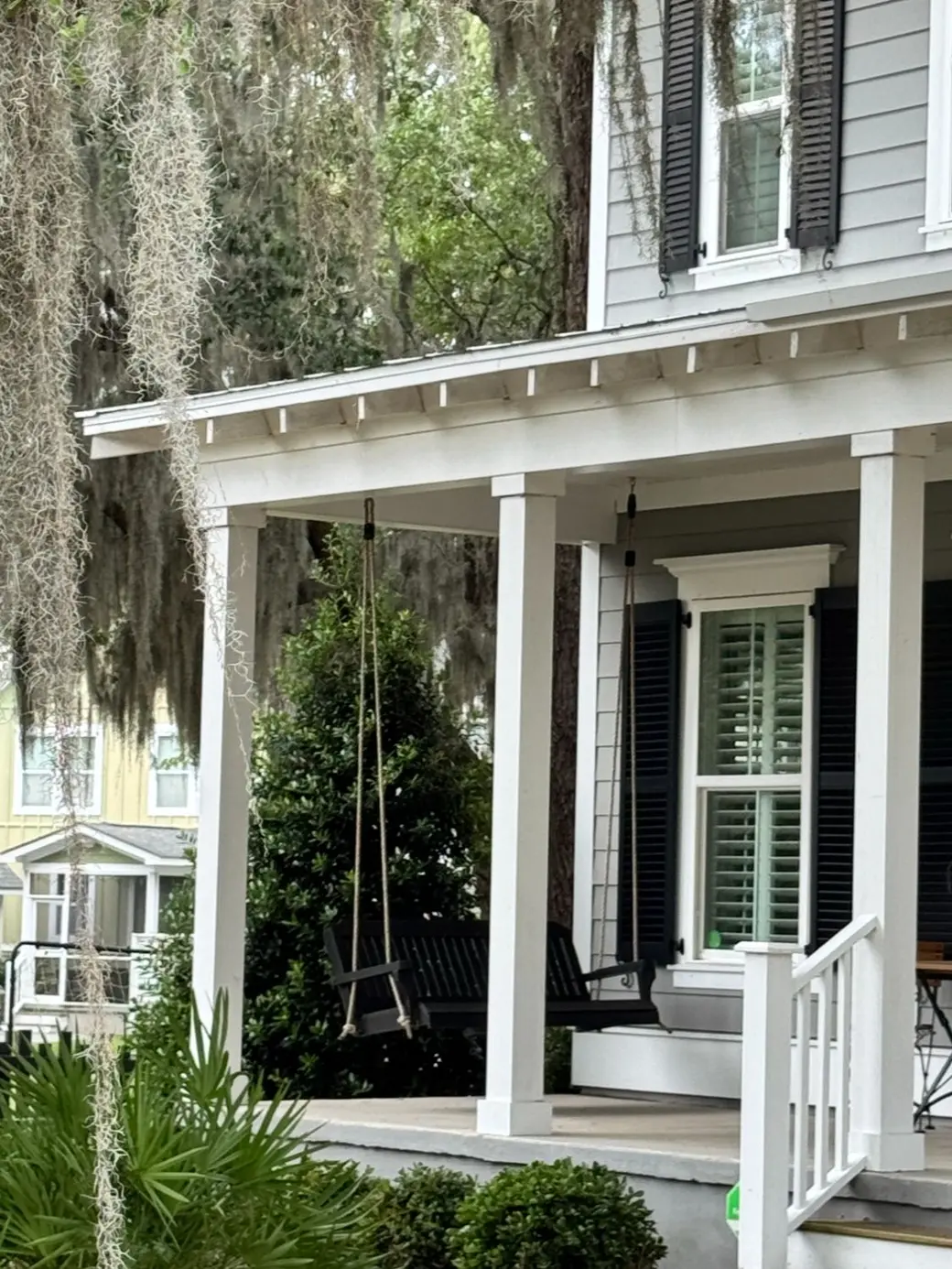
Columbus, MS Neighborhoods & Areas: A Homebuyer’s Guide
Buying a home in Columbus, Mississippi, often starts with a simple question: Which area should I look in?
The answer depends less on finding one “best” neighborhood and more on understanding the different types of properties and residential areas available around Columbus.
A home search here can include historic streets near the city’s older core, established subdivisions in North and Upper North Columbus, covenant-governed communities, and properties with Columbus mailing addresses that are located in the broader Lowndes County area.
That distinction matters.
Two homes with a Columbus address can have very different characteristics when it comes to lot size, subdivision restrictions, municipal boundaries, utilities, property age and other considerations.
This guide introduces several Columbus, MS neighborhoods and areas buyers may encounter and, more importantly, explains what to investigate before deciding where to buy.
How to Think About Columbus Neighborhoods Before You Buy
Online real estate websites can make choosing a neighborhood seem as simple as comparing rankings, prices or automatically generated neighborhood names.
In reality, Columbus requires a little more context.
Some names refer to established subdivisions. Others describe broader geographic or MLS search areas. Columbus also has documented historic districts, while some properties marketed with Columbus addresses are located outside traditional city neighborhoods in the broader Lowndes County area.
City planning materials document multiple residential areas and development patterns throughout Columbus, reinforcing that the city is made up of more than one type of residential setting.
For buyers, the goal shouldn’t be to find the neighborhood someone else has labeled “best.”
Instead, start with the characteristics that matter for your own home search:
- Property type and condition
- Lot size
- Historic versus newer construction
- Subdivision restrictions or covenants
- Association obligations, when applicable
- Municipal location and utilities
- Access to the places you personally need to reach
- Your budget and long-term plans for the property
Then evaluate individual homes within the areas that meet those priorities.
Columbus Neighborhoods & Areas at a Glance
| Area | What Buyers Should Know |
|---|---|
| Southside / South Columbus | Historic residential area with significant documented architecture |
| North / Upper North Columbus | Broad residential search areas containing multiple subdivisions |
| Holly Hills | Established Columbus-area residential community |
| Cady Hills | Established Columbus-area residential community |
| Fox Run | Documented residential subdivision |
| Bluecutt Estates | Established Columbus-area community |
| Country Club | Documented Columbus-area place/community |
| Sherwood Forest | Documented residential subdivision |
| Prairie Waters | Residential subdivision with documented covenant and association history |
| Bent Tree Plantation | Residential community where property-specific municipal and utility details deserve attention |
| Elm Lake / Elm Lake Estates | Columbus-address community in the broader Lowndes County area |
| Broader Lowndes County | Additional home and land-search opportunities outside traditional city neighborhoods |
Important: Neighborhood names, subdivision boundaries, MLS areas, mailing addresses and municipal boundaries are not necessarily interchangeable. Always verify information for the specific property you are considering.
Historic Homes and Southside Columbus
Southside / South Columbus Historic District
For buyers interested in historic residential architecture, South Columbus deserves particular attention.
The Mississippi Department of Archives and History identifies the South Columbus Historic District as a historically and architecturally significant area illustrating Columbus’s development beginning in the early 1800s.
The district contains one of Mississippi’s notable concentrations of nineteenth-century residential structures and documents architectural development extending from the 1820s through the 1930s. The district was listed on the National Register of Historic Places in 1982, with later boundary amendments.
Individual properties throughout the South Columbus/Southside area demonstrate the architectural history found in this part of the city.
MDAH documents Riverview, built in the 1840s, as one of Columbus’s significant Greek Revival properties, located in the same South Columbus/Southside area covered by the historic district.
What Should a Buyer Consider With a Historic Home?
Buying an older property can involve different questions from purchasing a newer home.
Depending on the individual property, buyers may want to investigate:
- Roof and structural condition
- Electrical and plumbing systems
- Heating and cooling systems
- Previous renovations or additions
- Foundation conditions
- Insurance considerations
- Property-specific historic designations
- Applicable local requirements
- Whether proposed renovations require additional review or approval
A property being located within a historic district does not by itself tell you everything that can or cannot be changed.
Buyers considering renovations should verify the requirements that apply to the specific property before purchasing or beginning work.\
North Columbus and Upper North Columbus
North Columbus and Upper North Columbus are useful terms when searching for homes, but buyers should understand that they can describe broader areas rather than one single subdivision.
City documentation and independent mapping records confirm a number of established residential communities and subdivisions throughout the northern Columbus area.
The important distinction for a buyer is understanding whether a name refers to a specific subdivision, a broader search area or simply a commonly used geographic description.
Holly Hills
Holly Hills is an established residential community in the Columbus area.
For a buyer, the neighborhood or subdivision name is only the beginning of the research. The individual home’s age, condition, lot, improvements, restrictions and exact location still need to be evaluated independently.
Rather than assuming every Holly Hills property offers the same features, compare the specific home with your priorities.
Cady Hills
Cady Hills is another established residential area buyers may encounter when searching Columbus.
Homes within an established community can differ significantly in age, renovation history, lot characteristics and condition.
The individual property should therefore be evaluated on its own merits rather than relying on assumptions about the area as a whole.
Fox Run
Fox Run is a documented residential subdivision in the Columbus area and is one of the established communities buyers may encounter when searching northern Columbus.
As with any subdivision, buyers should verify the particular home’s condition, lot, restrictions, municipal location and other property-specific details rather than assuming every property within the subdivision is the same.
There is also an apartment community in Columbus using the Fox Run name, so buyers searching online should make sure they are looking at the residential property or community they intended to search.
Bluecutt Estates
Bluecutt Estates is another established residential community buyers may encounter in the Columbus area.
As with the other communities in this guide, buyers shouldn’t assume that every home has the same lot size, age, restrictions or features.
The individual property matters more than the neighborhood label alone.
Country Club
Country Club is a documented Columbus-area residential community.
The name can naturally lead buyers to make assumptions about golf-course frontage or amenities, but the name alone does not establish that every property has the same relationship to a golf course.
When considering a home here, verify the exact lot location, property characteristics, restrictions and any amenities or access that are important to you rather than relying on the community name.
Sherwood Forest
Sherwood Forest is a documented residential subdivision in the Columbus area.
As with other established subdivisions, individual homes can vary in age, condition, lot characteristics, improvements and restrictions.
Buyers should verify municipal boundaries, utility service and other property-specific information for the exact address they are considering.
Planned and Covenant-Governed Communities
Some Columbus-area searches introduce another layer of due diligence: recorded covenants and property-owner associations.
Those documents can matter if you have specific plans for the property.
Before buying, consider asking for current copies of any applicable:
- Restrictive covenants
- Association bylaws
- Rules and regulations
- Architectural requirements
- Current dues or assessments
- Common-area responsibilities
Don’t rely solely on an old copy found online. Obtain the documents currently applicable to the property.
Prairie Waters
Prairie Waters is particularly well documented.
The bylaws of the Prairie Waters Property Owners Association identify Prairie Waters as a residential subdivision in Columbus and reference restrictive covenants recorded with the Lowndes County Chancery Clerk.
For a buyer, that doesn’t mean relying on an older online document to determine today’s obligations.
Instead, the documented history of covenants and an association makes obtaining the current governing documents an important part of property-specific due diligence.
Questions to ask include:
- Which covenants currently apply to this lot?
- Is association membership currently required?
- What are the current dues or assessments?
- Are there architectural or use restrictions?
- Have the governing documents been amended?
- Are there common areas or responsibilities associated with ownership?
The answers should come from current property-specific documentation.
Bent Tree Plantation
Bent Tree Plantation provides an especially useful example of why property-specific research matters.
Official Columbus Light & Water records from a 2022 meeting discuss a portion of Bent Tree Plantation that was within Columbus city limits while being served by other utility providers under existing service arrangements.
That provides an important lesson for buyers:
Do not determine utility service or municipal status solely from a mailing address or subdivision name.
For a Bent Tree property—or any property where jurisdiction or utility service isn’t obvious—verify the exact parcel before making assumptions.
Residential properties and land within the same broader community can also have different lot sizes and property characteristics. It would therefore be misleading to describe the entire community as having one particular lot size or home type.
Elm Lake and the Broader Columbus-Area Search
Elm Lake and Elm Lake Estates provide another example of why buyers should look beyond the mailing address alone.
Properties associated with these communities may carry a Columbus mailing address while being located in the broader Lowndes County area.
This is exactly why a Columbus address doesn’t necessarily tell you everything about where a property sits from a municipal or utility perspective.
For buyers who are open to searching beyond traditional city neighborhoods, the broader Lowndes County area can add additional possibilities.
Those properties may involve different questions about:
- Municipal jurisdiction
- Water and sewer service
- Electric provider
- Road access
- Recorded restrictions
- Septic systems, where applicable
- Flood information
- Zoning or land-use rules
None of those characteristics should be assumed for an entire area. Verify them for the specific property.
A Columbus Address Doesn’t Tell You Everything About the Property
This may be one of the most important lessons in a Columbus home search.
A postal address, MLS search area, subdivision name and municipal boundary can describe different things.
A listing may use Columbus as the mailing address even though the property is located in the broader Lowndes County area. In other situations, municipal boundaries and utility-service areas may not line up the way a buyer expects.
Bent Tree Plantation provides a documented example where utility arrangements for a portion of the community differed from what someone might assume based solely on municipal location.
Before buying, verify the exact property rather than relying on the address alone.
That can include confirming:
- Whether the property is inside municipal limits
- Which utilities serve it
- Whether restrictive covenants apply
- Whether an association exists
- Flood information
- Zoning or land-use considerations
- Other property-specific restrictions
Looking for More Land Around Columbus?
Some buyers begin their search with a neighborhood name.
Others care more about lot size, acreage, outbuildings or a particular type of property.
If land is one of your priorities, it can make sense to broaden the search beyond traditional Columbus neighborhoods into the surrounding Lowndes County area.
The key is not to assume that every property outside a subdivision offers the same advantages—or the same requirements.
For acreage and larger-lot properties, investigate matters such as:
- Exact property boundaries
- Survey information
- Road access
- Easements
- Utilities
- Septic or sewer service
- Flood information
- Zoning or land-use restrictions
- Recorded covenants
- Intended use of the land
A larger lot can create additional possibilities, but it can also create additional due-diligence questions.
Buying an Older Home in Columbus
Because Columbus has a substantial documented historic building inventory, some homebuyers will encounter properties considerably older than a typical modern subdivision home.
The Mississippi Department of Archives and History records for South Columbus alone document residential structures representing a long span of the city’s history.
An older home’s character can be appealing, but age makes a thorough property-specific evaluation especially important.
When Were the Major Systems Updated?
Find out what is known about electrical, plumbing, HVAC and roofing work.
Have Additions or Renovations Been Completed?
Ask what documentation is available for significant alterations.
What Does the Inspection Reveal?
A home’s appearance does not tell you the condition of systems you cannot easily see.
Does a Historic Designation Apply?
Verify the exact property’s status and investigate any requirements that could affect your plans.
Will the Property Work for the Way You Intend to Use It?
Your plans matter. A buyer considering substantial renovations may have different questions from someone who wants to preserve an older home largely as it exists.
Questions to Ask Before Choosing a Columbus Area
Before narrowing your home search to a particular Columbus neighborhood, subdivision or area, ask:
- Is this a formal subdivision, historic district or broader MLS/geographic area?
- Is the property actually within Columbus city limits?
- Which utilities serve this exact address?
- Are there recorded restrictive covenants?
- Is there a homeowners or property owners association?
- What current dues or assessments apply, if any?
- Does the property have a historic designation?
- Are there restrictions that could affect renovations or your intended use?
- What should be investigated during inspections and due diligence?
- Does the property’s location work for the places you personally need to reach?
Those questions are more useful than asking someone to name the “best neighborhood in Columbus.”
The right area depends on the property and your priorities.
Explore Homes for Sale in Columbus, MS
Once you’ve identified the type of property and area that fit your search, the next step is seeing what’s actually available.
Explore Columbus homes and real estate through The McGill Group’s Columbus property search.
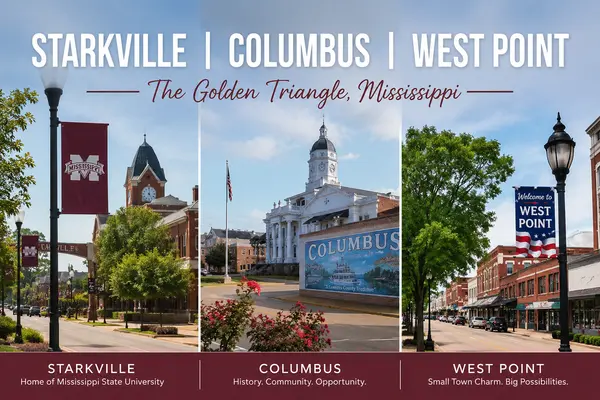
If you’re still deciding between Columbus and other parts of Mississippi’s Golden Triangle, read Moving to the Golden Triangle, Mississippi: Starkville vs. Columbus vs. West Point to compare the three communities before narrowing your search.
Frequently Asked Questions About Columbus, MS Neighborhoods
What Are Some Neighborhoods and Subdivisions in Columbus, MS?
Columbus includes historic residential areas and a number of established communities and subdivisions. Examples buyers may encounter include Southside/South Columbus, Cady Hills, Holly Hills, Fox Run, Bluecutt Estates, Country Club and Sherwood Forest. Prairie Waters and Bent Tree Plantation are additional documented residential communities.
Buyers should distinguish between formal subdivisions, historic districts and broader geographic or MLS search areas.
Does Columbus, Mississippi Have Historic Neighborhoods?
Yes. The South Columbus Historic District is listed on the National Register of Historic Places. Mississippi Department of Archives and History records document its significant concentration of nineteenth-century residential structures and architecture spanning multiple periods.
What Is the South Columbus Historic District?
The South Columbus Historic District is a documented historic district that was listed on the National Register of Historic Places in 1982, with later boundary amendments. It reflects a significant part of Columbus’s architectural and residential history.
Are There Subdivisions in North Columbus?
Yes. Buyers searching northern Columbus may encounter established communities and subdivisions including Cady Hills, Holly Hills, Fox Run, Bluecutt Estates, Country Club and Sherwood Forest.
Because North Columbus and Upper North Columbus can also be used as broader search terms, buyers should verify the formal subdivision and exact location of an individual property.
What Should I Know About Buying in a Subdivision With Covenants?
Ask for the current recorded covenants and any applicable association documents before buying.
Review restrictions, current dues or assessments, architectural requirements and responsibilities that may apply to the specific property.
Prairie Waters, for example, has documented association and restrictive-covenant history, but buyers should obtain current property-specific documentation rather than relying on older online information.
Does a Columbus Mailing Address Mean the Home Is Inside Columbus City Limits?
Not necessarily.
A mailing address, municipal boundary and MLS search area can describe different things. Buyers should verify the individual parcel, municipal jurisdiction and utility providers rather than assuming a Columbus mailing address establishes all of those details.
Can I Find Homes With More Land Around Columbus?
The broader Columbus and Lowndes County search can include larger-lot and acreage properties.
Availability changes, so buyers should search current inventory rather than assuming a particular neighborhood or area always offers acreage.
What Should I Do First if I’m Considering Buying a Home in Columbus?
Start by defining what matters most about the property itself—budget, home type, lot size, condition and location needs.
Then identify the Columbus areas that fit those priorities and review current inventory.
Frequently Asked Questions About Columbus, MS Neighborhoods
What Are Some Neighborhoods and Subdivisions in Columbus, MS?
Columbus includes historic residential areas and a number of established communities and subdivisions. Examples buyers may encounter include Southside/South Columbus, Cady Hills, Holly Hills, Fox Run, Bluecutt Estates, Country Club and Sherwood Forest. Prairie Waters and Bent Tree Plantation are additional documented residential communities.
Buyers should distinguish between formal subdivisions, historic districts and broader geographic or MLS search areas.
Does Columbus, Mississippi Have Historic Neighborhoods?
Yes. The South Columbus Historic District is listed on the National Register of Historic Places. Mississippi Department of Archives and History records document its significant concentration of nineteenth-century residential structures and architecture spanning multiple periods.
What Is the South Columbus Historic District?
The South Columbus Historic District is a documented historic district that was listed on the National Register of Historic Places in 1982, with later boundary amendments. It reflects a significant part of Columbus’s architectural and residential history.
Are There Subdivisions in North Columbus?
Yes. Buyers searching northern Columbus may encounter established communities and subdivisions including Cady Hills, Holly Hills, Fox Run, Bluecutt Estates, Country Club and Sherwood Forest.
Because North Columbus and Upper North Columbus can also be used as broader search terms, buyers should verify the formal subdivision and exact location of an individual property.
What Should I Know About Buying in a Subdivision With Covenants?
Ask for the current recorded covenants and any applicable association documents before buying.
Review restrictions, current dues or assessments, architectural requirements and responsibilities that may apply to the specific property.
Prairie Waters, for example, has documented association and restrictive-covenant history, but buyers should obtain current property-specific documentation rather than relying on older online information.
Does a Columbus Mailing Address Mean the Home Is Inside Columbus City Limits?
Not necessarily.
A mailing address, municipal boundary and MLS search area can describe different things. Buyers should verify the individual parcel, municipal jurisdiction and utility providers rather than assuming a Columbus mailing address establishes all of those details.
Can I Find Homes With More Land Around Columbus?
The broader Columbus and Lowndes County search can include larger-lot and acreage properties.
Availability changes, so buyers should search current inventory rather than assuming a particular neighborhood or area always offers acreage.
What Should I Do First if I’m Considering Buying a Home in Columbus?
Start by defining what matters most about the property itself—budget, home type, lot size, condition and location needs.
Then identify the Columbus areas that fit those priorities and review current inventory.
Start Your Columbus Home Search
Choosing where to live in Columbus doesn’t have to begin with a neighborhood ranking.
It can begin with a better question:
What kind of property and location will work for the way I want to live and use the home?
From historic South Columbus to established residential communities in the northern part of the city and properties throughout the broader Lowndes County area, there are several different ways to approach a Columbus home search.
The McGill Group | REAL Broker can help you explore current Columbus-area properties, understand the terminology used in listings and investigate property-specific questions as you narrow your options.
Categories
Recent Posts


Top-Producing Realtor® | The McGill Group | Real Broker License ID: S56983
+1(662) 251-7417 | michellemcgill@themcgillgroup.ms