
Selling a Home in Columbus, MS: What Sellers Should Know Before Listing

Selling a Home in Columbus, MS: What Sellers Should Know Before Listing
Selling a home in Columbus, Mississippi, involves more than deciding on a price and putting a property on the market.
Before listing, homeowners should think about the condition of the property, pricing strategy, preparation, disclosures, marketing, showing plans, potential offers, and what may happen after a contract is accepted.
Columbus also presents some property-specific considerations that sellers shouldn’t overlook. A home in the South Columbus historic area may raise different questions from a property in an established subdivision, a covenant-governed community, or a home with a Columbus mailing address located elsewhere in Lowndes County.
While the overall selling process is similar throughout the Golden Triangle, Columbus properties can come with distinct considerations—from historic-property requirements to recorded covenants, land records, and property-specific jurisdiction details.
That’s why a strong selling strategy should begin with the specific property, not a generic checklist.
If you’re considering selling a home in Columbus, MS, this guide explains the major decisions worth thinking through before your home goes on the market.
Start With Your Selling Goals
Before deciding what to repair or what price to ask, think about what you need the sale to accomplish. Your priorities can affect decisions throughout the transaction.
Consider questions such as:
- Are you hoping to move within a particular timeframe?
- Will you need to purchase another home?
- Is the property occupied or vacant?
- Does the home need preparation before photography and showings?
- Are there maintenance or repair issues you already know about?
- Are you primarily concerned with price, timing, convenience, or another part of the transaction?
- Do you have documents relating to the property, renovations, surveys, covenants, or an association?
- Is the property older or potentially subject to historic considerations?
You don’t need every answer before speaking with a real estate professional. But understanding your priorities gives you a better starting point for decisions about preparation, pricing, and marketing.
Understand Your Columbus Property Before Setting a List Price
One of the first questions sellers ask is:
“What is my Columbus home worth?”
There isn’t one number that can accurately describe every Columbus property.
Even homes relatively close to each other can differ substantially in square footage, lot characteristics, age, condition, renovations and updates, property type, exact location, amenities, recorded restrictions, municipal location, and overall competition when the property enters the market.
That makes a property-specific pricing analysis particularly important.
Comparable Properties Matter More Than an Online Estimate
Automated home-value tools can be useful as a reference point, but they don’t replace an analysis of the actual property.
Relevant recent sales and current competing listings can provide useful evidence, but those properties also need to be compared thoughtfully.
Two homes with similar square footage may differ in age, condition, renovation quality, lot characteristics, restrictions, or location. A historic home in South Columbus, for example, shouldn’t automatically be compared with a newer home simply because the two properties have a similar bedroom count or square footage.
The goal isn’t to find an identical property. It’s to determine which available comparables actually help explain the market for the home you’re selling.
List Price Is a Strategy, Not a Guarantee
The seller chooses a list price. That doesn’t guarantee what a buyer will ultimately agree to pay or what an appraisal may support if financing is involved.
A pricing strategy should consider relevant recent sales, current competing properties, the home’s condition, improvements and renovations, lot and property characteristics, property-specific restrictions or obligations, and current buyer competition for similar homes.
Choosing the highest online estimate isn’t the same thing as establishing a market-supported strategy.
What Should You Do Before Listing Your Columbus Home?
One of the most common seller questions is:
“What do I need to do to my house before I sell it?”
There isn’t one answer for every property.
Some homes may require relatively little preparation. Others may benefit from maintenance, repairs, cleaning, or presentation work before professional photography and showings begin.
The important point is that preparing to sell does not automatically mean renovating the entire house.
Start With Obvious Maintenance
Walk through the property and look at it from a buyer’s perspective.
Pay attention to things like burned-out lights, leaking faucets, loose or damaged hardware, damaged screens, peeling or damaged finishes, exterior maintenance, landscaping that needs attention, clutter around mechanical areas, and other readily visible maintenance concerns.
That doesn’t mean every imperfection has to be repaired. It means the seller should know what is there and make an informed decision about how it fits into the listing strategy.
Preparation should also never be used to conceal a known property condition that may need to be disclosed.
Declutter and Prepare for Photography
Many buyers will first encounter your property online.
Before photography, consider cleaning surfaces and floors, reducing unnecessary clutter, clearing crowded countertops, making rooms easy to understand visually, removing excessive personal items, improving exterior presentation, cleaning windows where appropriate, and moving vehicles or equipment that distract from exterior photographs.
The objective isn’t to make the home look artificial. It’s to make it easier for potential buyers to understand the property.
Be Careful About Renovating Just to Sell
A seller doesn’t necessarily need a new kitchen, new bathrooms, or a major renovation before listing.
Before starting an expensive project, ask what problem you’re trying to solve, what the project will cost, how long it will take, whether it’s necessary for the intended listing strategy, and how the home’s current condition compares with relevant competing properties.
Do not assume an improvement will automatically return its full cost when the property sells. The decision should be made property by property.
Mississippi Property Condition Disclosure Requirements
The Mississippi Real Estate Commission publishes the state’s official Property Condition Disclosure Statement (PCDS) and supplemental forms.
MREC materials state that under Mississippi’s applicable statutes, a seller of residential real property consisting of one to four dwelling units generally must provide a Property Condition Disclosure Statement when the transfer is made by or with the aid of a licensed real estate broker or salesperson, subject to statutory provisions and exclusions.
The disclosure is not a warranty, and MREC states that it is not a substitute for a home inspection.
The form addresses a wide range of property information, including systems and components as well as matters such as surveys, encroachments, easements, boundary disputes, drainage issues, restrictive covenants, zoning matters, and other property restrictions when applicable.
Sellers should use the current MREC form rather than relying on an old saved copy.
If questions arise about legal obligations or how a particular circumstance should be handled, seek guidance from the appropriate real estate or legal professional.
This section is general information and is not legal advice.
Selling an Older or Historic Home in Columbus
This is one area where selling a home in Columbus can require additional property-specific research.
The Mississippi Department of Archives and History identifies the South Columbus Historic District, originally listed on the National Register of Historic Places in 1982, as a significant historic residential area. MDAH documents architecture in the district spanning from the 1820s through the 1930s.
MDAH records also document individual Columbus properties as contributing elements of the district, including residential properties dating to the nineteenth century.
For a seller of an older or historically designated property, useful preparation may include gathering available information about the property’s age and history, major renovations or additions, roof replacement, electrical updates, plumbing updates, HVAC work, structural or foundation work, surveys, historic designation if applicable, preservation easements if applicable, and documentation for significant improvements.
The goal isn’t to turn the listing into a history lesson. It’s to make sure significant property information is accurate and available when it matters.
Historic Status Should Be Verified Property by Property
A home looking historic does not necessarily tell you its legal or preservation status.
Likewise, being located in a historic area does not automatically tell a seller what rules apply to a particular improvement.
Columbus maintains a Historic Preservation Commission, and exterior changes within applicable historic districts can require a Certificate of Appropriateness.
Before making claims about a property’s designation—or beginning exterior work intended to prepare a historic property for sale—verify the requirements that apply to that specific property and proposed work.
Gather Property Documents Before You List
One of the easiest ways to create unnecessary stress is to wait until the property is under contract to start looking for important documents.
Depending on the property, useful records might include:
- Survey or recorded plat
- Deed information
- Restrictive covenants
- Association documents
- Easements
- Renovation documentation
- Warranties
- Permits where applicable
- Documentation of major repairs
- Shared access or maintenance agreements
Lowndes County’s Chancery Clerk records and preserves deeds, deeds of trust, and other official land records. Its online records system also includes searchable document types such as covenants, restrictive covenants, easements, and plats.
That doesn’t mean a homeowner should interpret legal documents without professional assistance.
It does mean that property records exist and should not be replaced by assumptions or an old listing description.
A Columbus Mailing Address Doesn’t Tell You Everything
A postal address, municipal boundary, subdivision, and utility-service area do not necessarily describe the same thing.
A property marketed with a Columbus mailing address may require property-specific verification regarding municipal jurisdiction, utility providers, recorded subdivision, covenants, association obligations, zoning, flood information, and other land or property restrictions.
The Lowndes County Tax Office provides mapping and real-estate appraisal functions, while county land records are maintained through the Chancery Clerk.
If you’re unsure about an important property fact, verify it before putting the information into the listing.
This is especially important because old listings can perpetuate incorrect information from one sale to the next.
How Your Columbus Home Is Marketed Matters
Preparing the property is only part of selling it.
The next question is how buyers will experience it.
A marketing plan should accurately explain what the property is and help buyers understand its most relevant features without exaggerating or making claims that cannot be supported.
Professional-Quality Photography
Before photography, think about lighting, furniture placement, clutter, exterior presentation, landscaping, vehicles or equipment in view, window coverings, whether important rooms are visually understandable, and any property features that should be documented clearly.
Photography should make the home easy to understand without creating a misleading impression.
Accurate Listing Information
Review important property information before marketing begins.
Depending on the home, that may include bedroom and bathroom count, square footage source, lot information, property type, improvements, parking, outbuildings, association information, covenants, historic status, utilities, municipal location, and other property-specific features.
Don’t assume an old MLS listing, online portal, or tax record contains everything correctly.
If a detail matters, verify it.
Tell the Story of the Property—Accurately
Different Columbus properties may need different marketing approaches.
An older Southside home may require accurate presentation of architectural and historical information.
A subdivision property may have covenants or association information buyers need to understand.
A larger-lot property outside the traditional city core may require clear information about land, utilities, access, and property boundaries.
The marketing should fit the property.
Showing Your Columbus Home
Once the property is active, sellers need a practical showing plan.
Before listing, discuss how showing requests will be handled, how much notice is preferred when possible, whether pets are involved, what valuables or documents should be secured, whether the property is occupied or vacant, whether there are gates or alarms, and how feedback will be communicated.
A showing plan should balance the seller’s practical needs with reasonable access for potential buyers.
What Happens When You Receive an Offer?
The offered price matters, but it isn’t the only part of an offer that matters.
Depending on the contract, sellers may need to evaluate:
- Purchase price
- Financing
- Earnest money
- Contingencies
- Requested concessions or credits
- Inspection or due-diligence provisions
- Closing date
- Possession
- Property included in the sale
- Other contract-specific terms
A higher price doesn’t automatically make an offer stronger in every respect.
Compare the whole offer, not one number.
When legal interpretation is needed, consult the appropriate attorney.
Inspections, Repairs, and Negotiations
Accepting an offer doesn’t necessarily mean the decision-making is finished.
Depending on the contract, the buyer may have inspection or other due-diligence rights.
If concerns arise, the next steps depend on the contract and circumstances.
Sellers should review the request, understand the contract, consider the cost and practical implications, use qualified professionals when appropriate, and keep records of completed work.
If new information about the property’s condition is discovered during the transaction, discuss any disclosure implications promptly with the appropriate professionals.
The Appraisal and Buyer Financing
When a buyer is financing the purchase, the lender may require an appraisal.
An appraisal is different from the seller’s list price, the buyer’s offer, and a home inspection.
A signed contract does not guarantee that an appraisal will support the agreed purchase price.
If an appraisal issue occurs, the available options depend on the financing, contract, and circumstances.
That is another reason to establish the initial pricing strategy using relevant property and market evidence rather than simply choosing a desired number.
Preparing for Closing
As the transaction moves toward closing, sellers still have responsibilities to manage.
Depending on the agreement, preparation can include completing agreed work, maintaining the property, providing requested documentation, coordinating move-out, reviewing closing information, addressing title-related requests with the appropriate professionals, confirming possession arrangements, and keeping required utilities active through the appropriate point in the transaction.
Taxes, settlement figures, title matters, and legal obligations should be reviewed using the documents and professionals involved in the specific transaction rather than assumptions based on someone else’s sale.
Common Mistakes Columbus Sellers Should Avoid
Pricing From an Online Estimate Alone
Automated estimates may not fully understand renovations, condition, historic characteristics, lot differences, covenants, or other property-specific details.
Use them as information—not the entire pricing strategy.
Comparing the Wrong Properties
Two properties can both say “Columbus” and still be poor comparables.
Look beyond the city name to the actual characteristics of the homes.
Making Expensive Improvements Without a Strategy
Don’t assume a major renovation is necessary simply because you’re preparing to sell.
Understand the reason for the project before committing time and money.
Repeating Information From an Old Listing Without Verifying It
A previous MLS description isn’t automatically a reliable source for today’s listing.
Verify important details.
Waiting to Locate Covenants, Surveys, or Other Records
If you know important property documents exist, start locating them before the home is under contract.
Focusing Only on Offer Price
Price is important, but financing, contingencies, concessions, timing, and other terms can materially affect an offer.
Review the complete proposal.
How the Type of Columbus Property Can Affect Your Selling Strategy
Columbus doesn’t have one single type of housing.
A historic property, an established subdivision home, a covenant-governed property, and a home on a larger parcel may each require a different approach to comparable sales, preparation, documentation, photography, property descriptions, buyer questions, and marketing.
For a closer look at the residential areas and terminology buyers may encounter, read our Columbus, MS Neighborhoods & Areas: A Homebuyer’s Guide.
The seller takeaway is simple:
Build the strategy around the home you actually own—not just the Columbus mailing address.
Selling in Columbus Because You’re Moving Somewhere Else?
Selling and buying at the same time adds another layer to the plan.
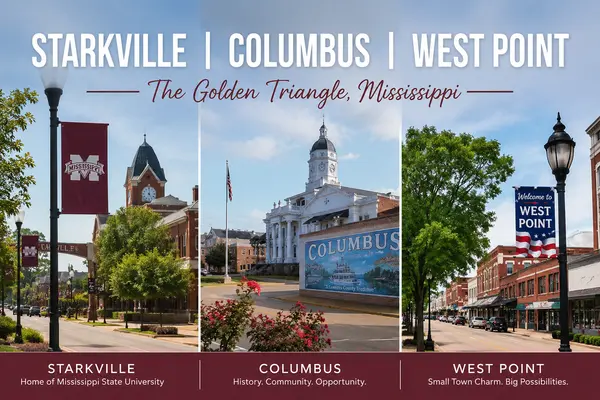
If you’re moving elsewhere within Mississippi’s Golden Triangle, you may be coordinating a Columbus sale with a purchase in Starkville, West Point, or another nearby community.
Our Moving to the Golden Triangle, Mississippi: Starkville vs. Columbus vs. West Point guide can help if you’re comparing the three core Golden Triangle communities.
If you’re buying and selling at the same time, discuss the sequence early.
Your financing, existing home, contracts, timing, and individual circumstances can all affect the options available to you.
There isn’t a universal “sell first” or “buy first” rule.
Questions to Ask Before Choosing a Columbus Listing Agent
How Will You Recommend a Listing Price?
Ask which recent sales, competing properties, and characteristics of your home are being considered.
A pricing recommendation should have a reason behind it.
What Should I Do Before Listing?
Ask whether the property needs repairs, cleaning, decluttering, staging, documentation, or other preparation—and which projects probably aren’t necessary.
How Will You Market This Particular Property?
Ask about photography, listing presentation, online exposure, showing access, and how the property’s specific characteristics will be communicated.
How Will You Verify Property Information?
This is particularly important for older homes, properties with covenants, acreage, and homes where municipal or utility information isn’t obvious.
How Will Showings Be Managed?
Understand how requests will be communicated and what will be expected of you.
How Will You Help Me Compare Offers?
Ask how the full terms—not just the purchase price—will be evaluated.
How Will We Communicate?
Understand how updates and important decisions will be communicated throughout the process.
What Happens After We Accept an Offer?
The listing process doesn’t end when the contract is signed.
Ask how inspections, appraisal, documentation, agreed work, and closing preparation will be coordinated.
Frequently Asked Questions About Selling a Home in Columbus, MS
How Do I Know What My Columbus Home Is Worth?
Start with a property-specific review of relevant recent sales, current competing homes, and the characteristics of your property.
Online estimates can provide another reference point, but they shouldn’t be the only factor used to establish a listing strategy.
Should I Make Repairs Before Selling?
Not every home needs the same work.
Identify known issues and evaluate the property’s condition before deciding which repairs make sense.
Should I Renovate My Columbus Home Before Listing?
Not automatically.
A large renovation can cost money and delay listing. Determine what problem the project is intended to solve and how it fits the property’s overall selling strategy before beginning major work.
Do I Need a Property Disclosure in Mississippi?
Mississippi Real Estate Commission materials state that sellers of residential real property consisting of one to four dwelling units generally must provide a Property Condition Disclosure Statement when the transfer is made by or with the aid of a licensed real estate broker or salesperson, subject to applicable statutory provisions and exclusions.
Use the current MREC form and seek appropriate professional guidance for questions about your particular transaction.
What if My Columbus Home Is Historic?
First, verify the property’s actual historic status rather than relying on appearance or an old listing.
If a designation or preservation requirement applies, determine what that means for the specific property, particularly before making exterior changes in preparation for sale.
Does a Columbus Mailing Address Mean My Property Is Inside the City?
Not necessarily.
Mailing address, municipal jurisdiction, and utility-service area can describe different things.
Verify the individual property before marketing those details.
How Long Does It Take to Sell a Home in Columbus?
There isn’t a responsible universal answer.
Timing depends on the individual property, pricing, condition, competition, buyer activity, financing, negotiations, and contract terms.
Current property-specific information is more useful than promising a fixed number of days.
What Should I Do First if I’m Thinking About Selling?
Start with the property itself.
Gather available documents, identify known maintenance concerns, think through your timing and goals, and review the home and relevant market evidence before making expensive improvements or choosing a list price.
Thinking About Selling a Home in Columbus?
You don’t have to make every decision before starting the conversation.
If you’re considering selling a home in Columbus, The McGill Group | REAL Broker can help you review the property, examine relevant comparable homes and sales, discuss preparation, and build a listing strategy around the specific property and your goals.
Explore Columbus homes and real estate.
Learn more about The McGill Group | REAL BROKER.
Categories
Recent Posts




Top-Producing Realtor® | The McGill Group | Real Broker License ID: S56983
+1(662) 251-7417 | michellemcgill@themcgillgroup.ms